
- Political – this area examines trading policies, funding, and grants. It also analyses the effects of changes to governments and how this will impact on the business
- Economic –for a business to remain competitive, it needs to produce profit. The economy of the country will have an impact on the organisation. If the economy is weak, the business will have to cut waste from its operations to become more efficient;
- Social – this area covers the demographics of the country. The UK workforce, for example, is changing in terms of culture and skills. The shortage of skilled labour will impact manufacturing operations.
- Technology – technological advances will impact how a production facility operates. For example, the innovations in robot technology have automated some production lines to the point where they can run unsupervised for several weeks;
- Legal – the implications of legislation changes will impact how a business can operate. These types of legislation force organisations to look at ways of becoming more efficient to comply; and
- Environmental – Although the primary goal of lean manufacturing is to systematically remove waste and non-value-added activities from the production process, applying lean concepts and practises also improves environmental performance. (i.e., reduction in energy use, water, and raw materials, as well as lower emissions of hazardous pollution).
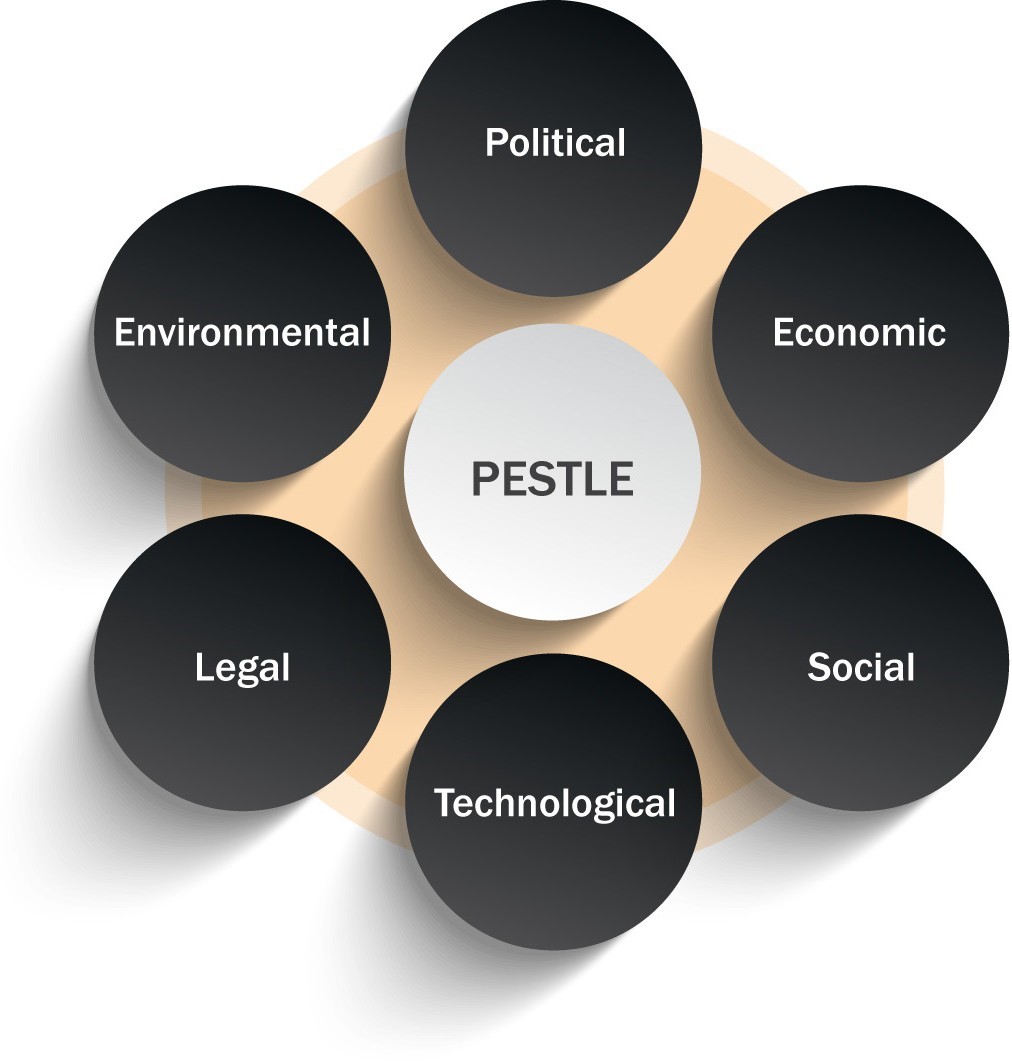
Figure 2 – PESTLE