
Put-away – Once the goods have been checked-in and the receipt process is completed (and if they are not required for immediate use) they can then be stored away.
Figure 2 illustrates the put-away process:
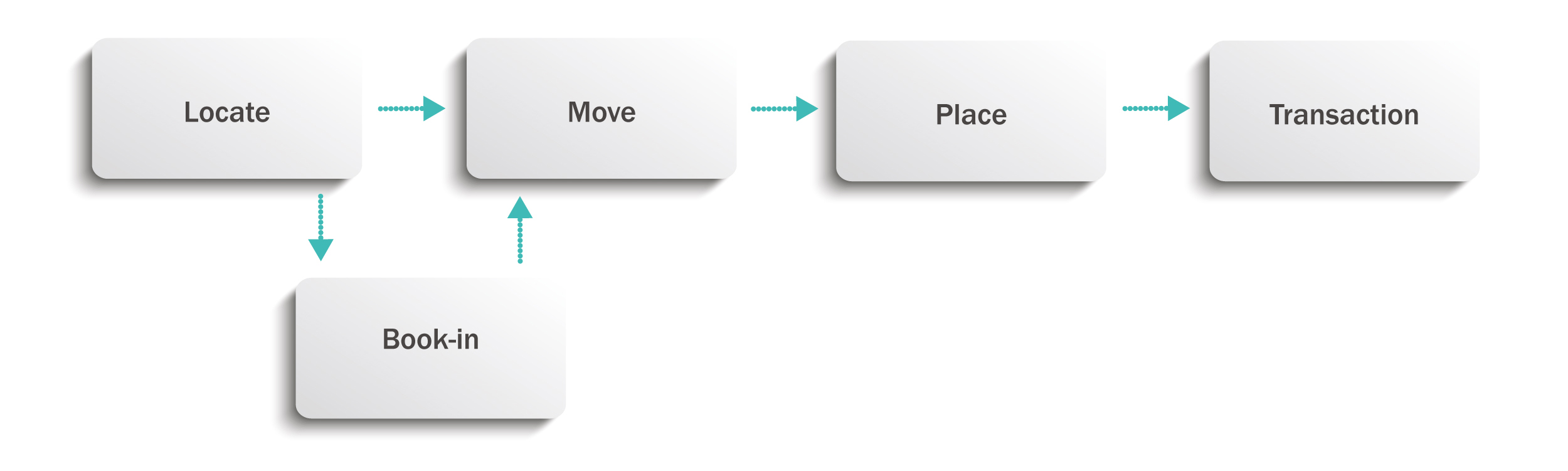
Figure 2: Put-Away Process
Locate – On completion of the receipt a decision will need to be made as to where to store the goods. This would be carried out according to the type of goods, so that the same type of goods are stored within the same area. Alternatively, a random put-away location method may be used. This method maximises the utilisation of the space available.
Schedule – In a high volume traffic warehouse and storage facility, it may be beneficial to schedule the movement of the Material Handling Equipment (MHE) to improve the utilisation.
Move – This is the physical transfer of the goods to the put-away location, normally by use of MHE.
Place – Upon reaching the put-away location, the goods need to be stored and the location recorded. The use of bar-coded locations can improve location records accuracy.
Transaction – In order to complete the put-away process, the transaction needs to be recorded on the inventory management system. Again, this can be done by EDI.
In some situations, items may need to be moved within a warehouse from one location to another. This will obviously increase the handling costs and increase the risk of damage.
All inventory movement within a facility must be recorded. If the current location of a product is not known, then it is as good as lost. With the increase in use of technology, the recording of transactions has simplified dramatically, as every movement can be recorded quickly and without error.