
Logistics Management is a systematic approach to managing the procurement, movement and storage of materials, parts and finished inventory (and the related information flows) through the organisation and its marketing channels so that current and future profitability are maximised through the cost-effective fulfilment of orders.
Modern approaches to logistics see the supply of the resources as a conduit from the entry point, perhaps raw material, to the consumer via finished goods. It acts as a ‘pipeline’ supplying goods to all the logistic elements in a single link (Rushton et al 2000). This is called the Supply Chain.
Michael Porter identified a set of interrelated generic activities common to a wide range of firms. The resulting model is known as the value chain. The aim, through using these activities, is to create a value exceeding the cost of providing the product or service, and therefore generating profit.
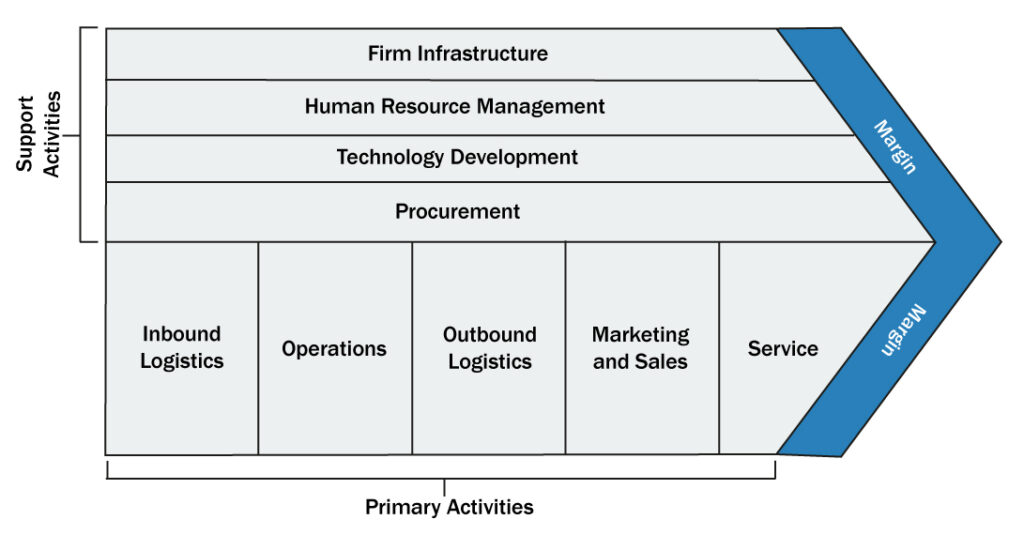
It is useful to model a firm as a chain of value-creating activities so that specific activities can be analysed, which will give a business competitive advantage.
When an organisation acquires or develops an attribute or combination of attributes that allows it to outperform its competitors, it is known as ‘Competitive Advantage’.