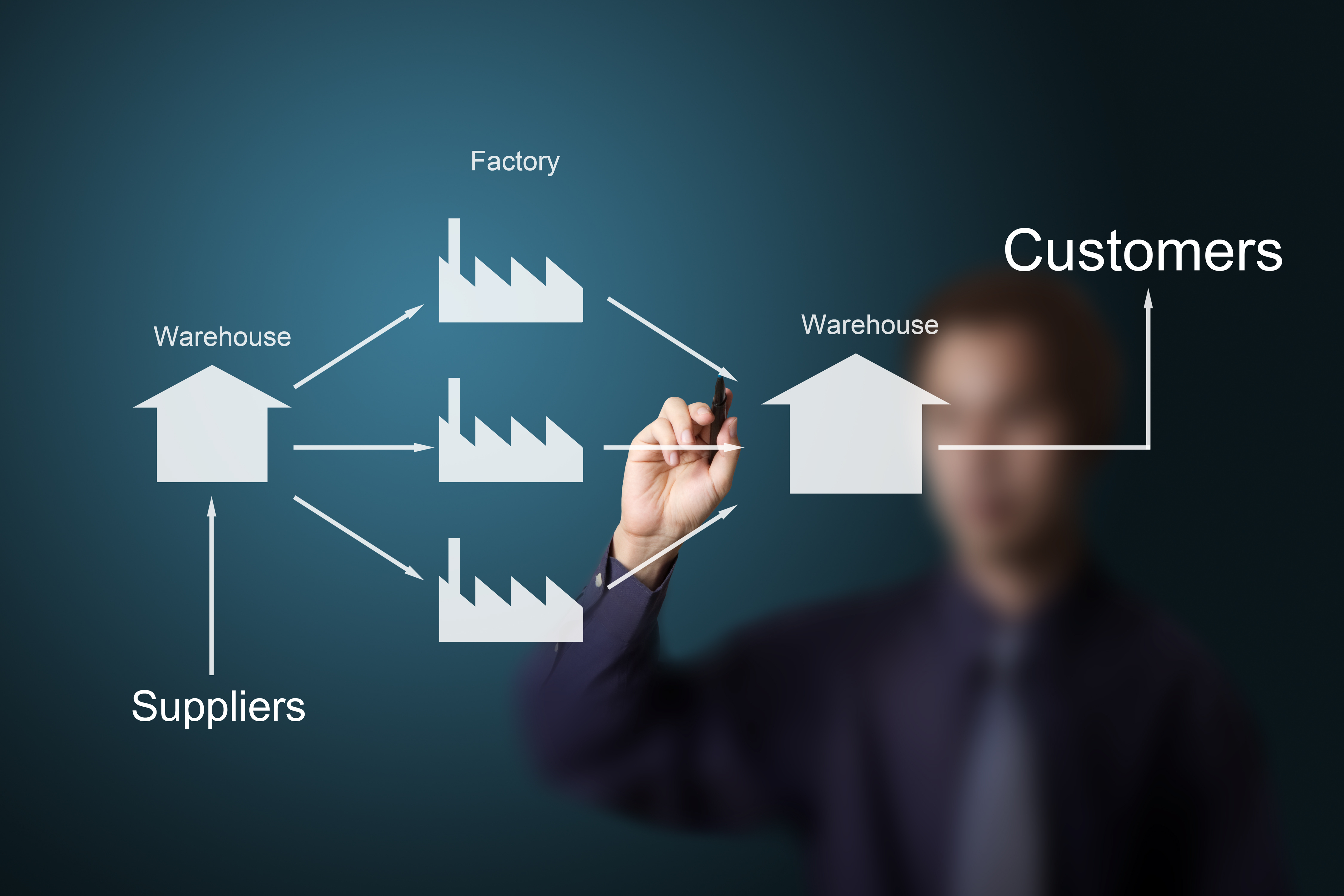
Supply Chain activities begin with a customer order and end when a satisfied customer has received the product or service.
The term supply chain conjures up images of product or supply moving from suppliers to manufacturers to distributors to retailers to customers along a chain however it is important to visualise information, finance and product flowing in both directions of this chain.
The next stage of this Supply Chain is the retail store that the customer visits.
The retail store stocks its shelves using inventory that may have been supplied from a finished goods warehouse that the retail store manages or from a distributor using trucks supplied by a third party.
The distributor in turn is stocked by the manufacturer (say Dairy Crest in this case). The Dairy Crest manufacturing plant receives raw material from a variety of suppliers who may themselves have been supplied by lower tier suppliers. For example, packaging material may come from Nampak packaging while Nampak receives raw materials to manufacture the packaging from other suppliers.
A Supply Chain is dynamic and involves the constant flow of information, product, and funds between different stages. In our example, the retailer provides the product, as well as pricing and availability information, to the customer.
The distributor also provides pricing information and sends delivery schedules to the retailer.
The customer transfers funds to the retailer. The retailer conveys point-of-sales data as well as replenishment order via trucks back to the store. The retailer transfers funds to the distributor after the replenishment.