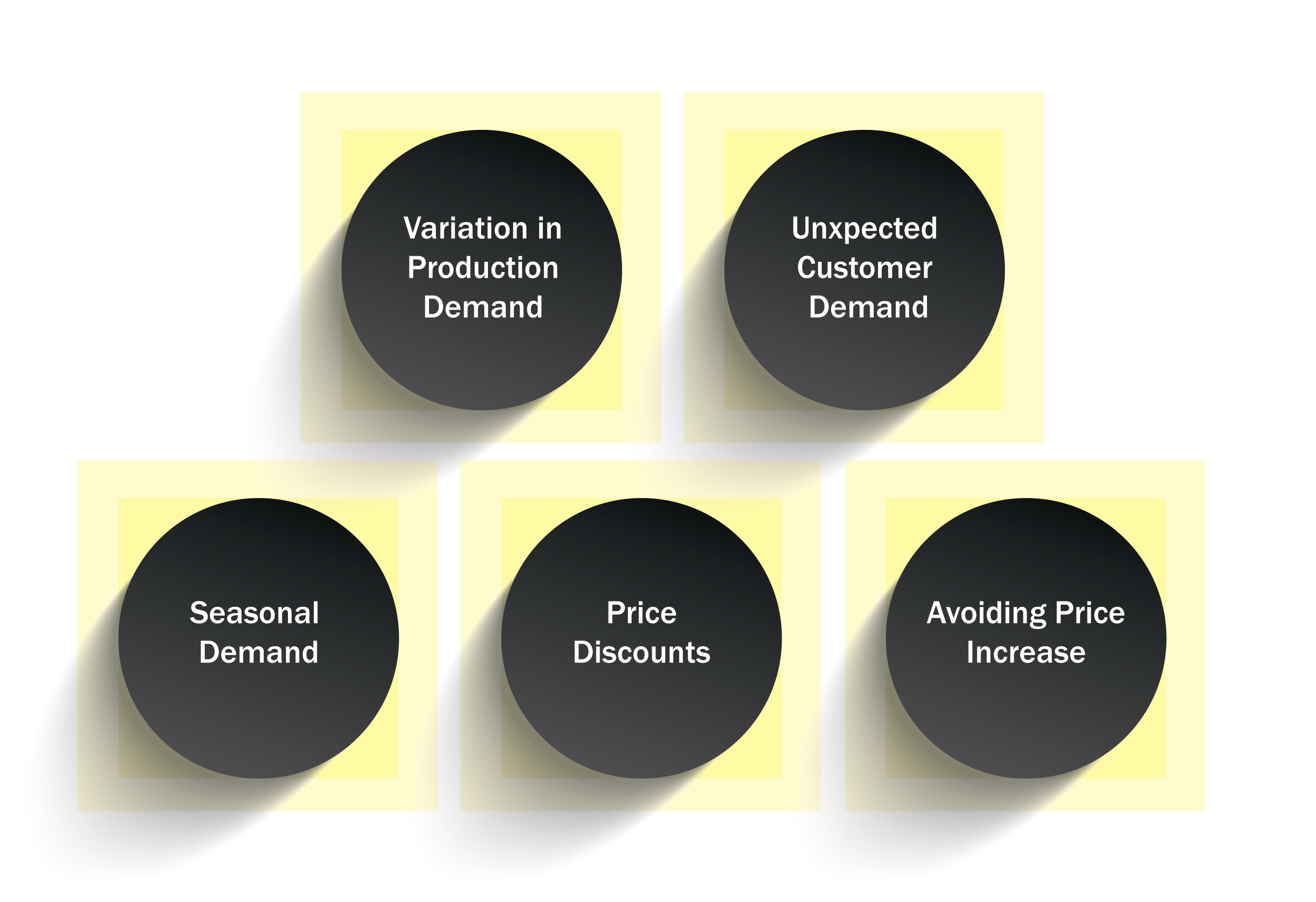
Seasonal Demand – With major events occurring throughout the year and the main seasonal holiday periods, an organisation will need to hold inventory in order to lessen the pressure of the seasonal demand. For example, with the Christmas period, retail outlets as well as other businesses would need to prepare in order to meet and stabilise the demands of customers. If the organisation has not prepared for this additional demand by increasing inventory, they would not be able to satisfy their customers…..a major loss of profits for any organisation.
Price Discounts – When a business purchases goods from manufacturers and suppliers, they are usually offered price discounts if they buy in bulk. These discounts are provided in order to attract and maintain regular buyers. Taking advantage of price discounts can be beneficial at times however, it is important not to purchase too much inventory. For example, a Christmas card retailer who over-orders on inventory just in case. At the end of the Christmas period, they would be left with inventory that cannot be sold.
Avoiding Price Increase – Businesses usually hold inventory to mitigate against the ever fluctuating market price of RMs. Thus, by having an efficient inventory system, businesses can control their inventory cost.
Some other reasons why an organisation may hold inventory:
- Protect against Supply Chain problems;
- Replace defective items;
- Improve the organisation’s balance sheet; and
- Enable the producer of the product to utilise capacity.
Other reasons for holding inventory include: Building stock for an expected uplift in sales as a result of a planned marketing/promotional event. Another reason is to cover for a planned break in supply such as a manufacturing shutdown. Considerations such as order smoothing would apply.