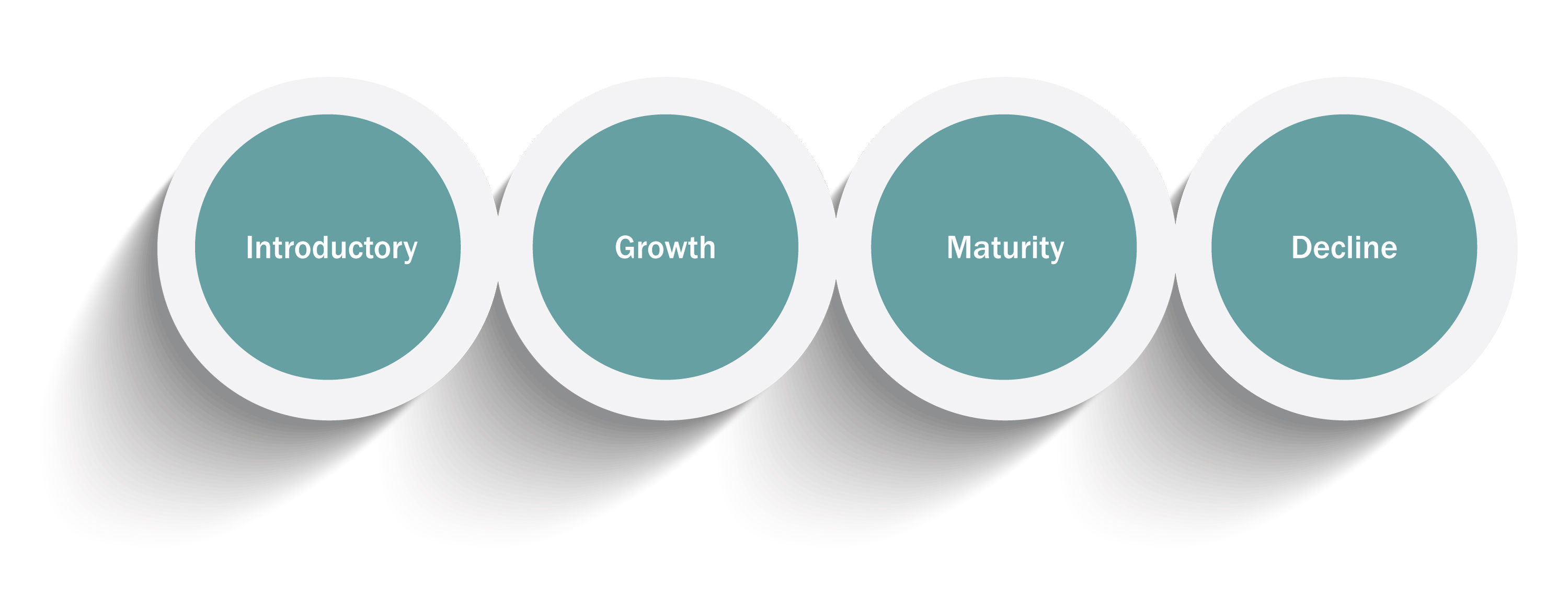
All products have a life cycle (PLC), typically, of four stages:
- Introductory – sees the product have a potentially low demand and little variety.
- Growth – there is an increase in volume which requires the supply chain to be well organised and structured in order to meet demands. Adequate stocks are normally held in order to meet growing demands.
- Maturity – this sees a decrease in market growth with an increase in variety of the products as a response and as such there is a requirement for the supply chain to be adjusted in line with these characteristics.
- Decline – this stage sees, with the increase in variety and market segments, the supply chain focussing on the reverse life cycle whilst trying to contain costs.
Short product life cycle goods have a demand that is unpredictable and short- lived meaning that the supply chain for these items must be flexible in nature so that demand can be met.
Seasonal sales, as an example, will mean that the time between growth and decline stages may only be a few months, and so it is essential that management of the order to delivery cycle time is done effectively in order to achieve competitive advantage.